Alcoves, Damp and Picture Rails: Hanging Original Art in an Older British Home

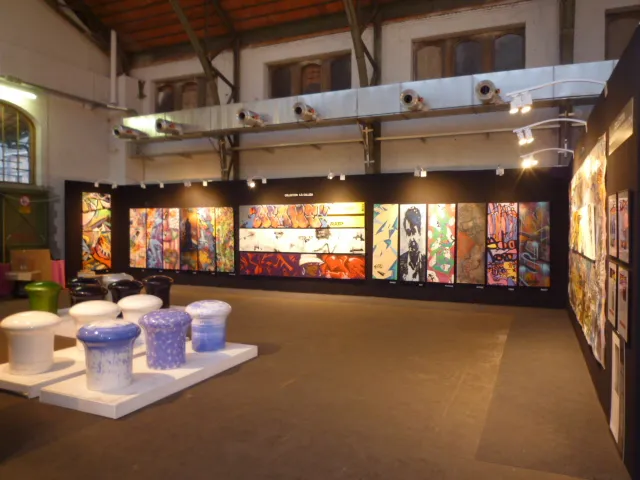
Photo: Martin Falbisoner, CC BY-SA 4.0, via Wikimedia Commons
A Victorian terrace is a wonderful place to live with paintings, right up until you try to hang one. The walls are not flat, the alcoves are deep, the chimney breast has its own opinions about damp, and the picture rail is either a gift or a trap depending on who last painted it. None of this means you should keep your original art in a cupboard. It means you need a slightly different approach from someone in a new-build flat with laser-straight walls.
Start with the wall, not the painting
Before you choose a spot, spend five minutes with the wall. Tap it. Look for patches of blown plaster, tide marks, cold spots and areas that feel damp to the touch. In an older British home, the external walls are the ones to watch. A painting hung directly on a cold, damp external wall is asking for trouble, especially in winter when condensation gathers behind the frame.
If the wall is sound, carry on. If it is not, either fix the damp first or hang the work somewhere kinder. A picture is not a dehumidifier.
Hallways: the first impression, and the worst light
Hallways in Victorian terraces are often narrow, dark and full of doors. They are also where a lot of us instinctively hang the first thing we buy. That can work, but keep it simple. A single small painting at eye level, or a tight group of two or three, is better than a crowded salon wall in a space where people are already dodging coats and buggies.
Watch the door swing. Watch the radiator. Watch the damp patch near the front door. And if the hallway gets no natural light, do not hang a delicate watercolour there just because the wall is empty. A stronger oil or acrylic will cope better with artificial light and busy traffic.
Alcoves: made for art, but not always ready for it
Alcoves are the Victorian terrace's built-in display cases. They are also often cold, dusty and slightly out of reach. A painting hung in an alcove can look wonderful, but check the depth of the wall and the condition of the plaster. If the alcove backs onto a chimney breast or an external wall, treat it with suspicion until you have lived through a damp winter.
For fixing, use the right plug for the surface. Victorian lath and plaster can be crumbly, so a heavy frame may need a fixing that reaches the brick or timber behind. If in doubt, ask a joiner or picture hanger. A fallen painting is a bad way to learn about plaster.
Chimney breasts: the damp question
Chimney breasts are a classic place for a large painting, and a classic place for damp. If the chimney is capped and ventilated, fine. If it is sealed without ventilation, moisture can migrate. If there is a damp patch, do not hang anything valuable there until it is sorted.
A useful trick is to keep the frame slightly off the wall with small spacers or a French cleat system that allows air to move behind. It will not solve a serious damp problem, but it helps in a room that is merely a bit old and breathy.
Picture rails: use them, but gently
Picture rails are one of the best things about older homes. They let you hang work without punching new holes in the plaster, and they make seasonal rotation much easier. Use proper picture rail hooks and cord rated for the weight of the frame. Do not use string, and do not overload a single hook with a heavy frame just because it is convenient.
Check the rail itself. Layers of gloss paint can make it look solid when it is not. Give it a gentle tug before you trust it with a large painting.
Rented flats: reversible is your friend
If you are renting, you still deserve to live with art. Use picture rails where they exist. Use adhesive hooks only for lightweight frames, and remove them carefully. For heavier work, ask the landlord if you can use proper fixings and make good afterwards. Keep the filled holes tidy and photograph the wall before and after.
A leaning shelf or a picture ledge can be a good renter-friendly option for smaller works, provided it is fixed safely and the painting is not in direct sun.
Strong sunlight: the quiet thief
A south-facing bay window is lovely for plants and terrible for watercolours. UV light fades pigments, and visible light does damage too. If you want to hang a light-sensitive work near a window, use UV-filtering glass and rotate it away from direct sun for part of the year. Or hang it on an internal wall and enjoy it without the slow fade.
Oils are more robust than works on paper, but they are not immune. A conservator will tell you that prevention is cheaper than correction.
Hanging heights that actually work
A good default is to place the centre of the painting at around 145–152cm from the floor. That is roughly eye level for many adults. In a room where people mostly sit, go slightly lower. Above a sofa, leave enough breathing room that nobody knocks the frame when they stand up. In a hallway, a little higher is fine, but not so high that you have to crane your neck.
If you are hanging a group, treat the whole arrangement as one shape and centre that shape at the same height. It sounds fussy. It looks calm.
Seasonal rotation
Older homes change with the seasons. A painting that looks fine in June can look gloomy in January, and a wall that is dry in summer can feel cold and damp in winter. Rotating work is not just a way to refresh a room; it is a way to spread the risk. Move delicate pieces away from winter condensation and strong summer sun. Give them a rest on an internal wall.
It also stops you going blind to your own collection. A painting you have not seen for six months becomes new again.
When to stop worrying about the plaster
At some point you have to accept that an old house is an old house. If the wall is sound, the fixings are right and the painting is not in direct damp or sun, hang it. Do not let a hairline crack in the plaster stop you enjoying a painting you bought because it moved you. The Victorians were not precious about walls. You do not have to be either.