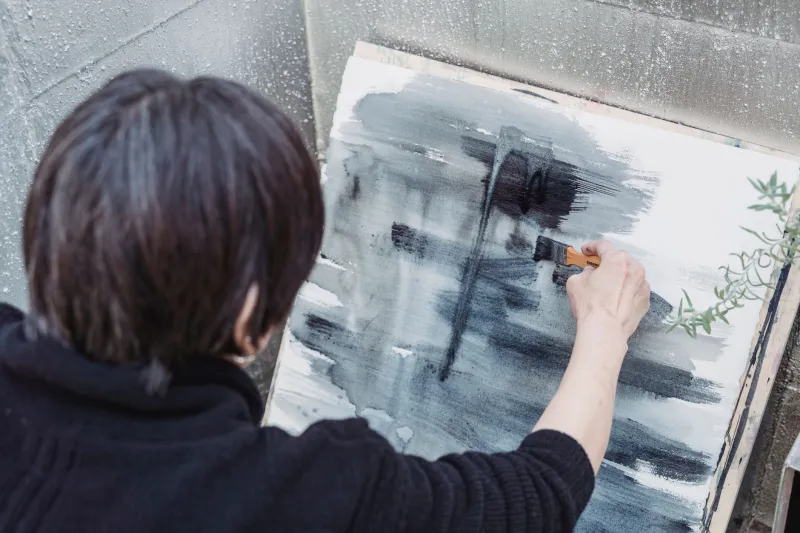
Muddy Boots and Honest Questions: Notes from a Soggy Open Studio Weekend
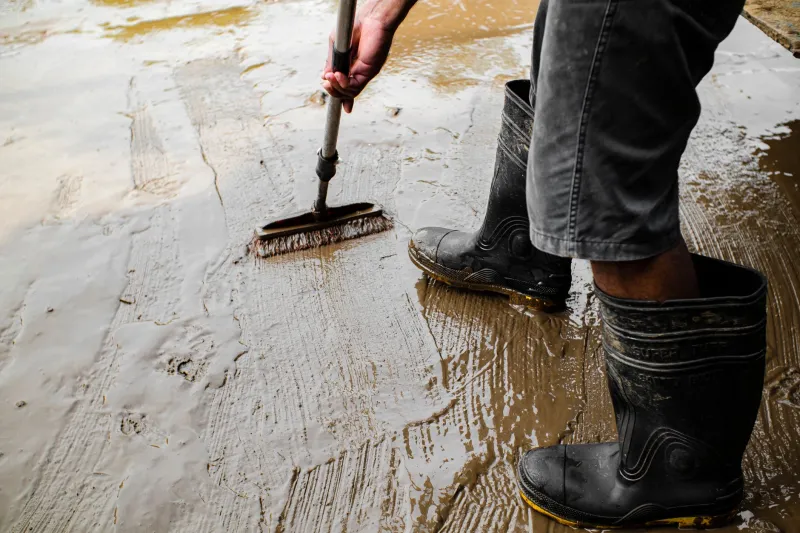
There is a particular strain of British optimism that goes into printing forty flyers and taping one to the village hall noticeboard for an open studio in November. You know, statistically, that it will rain. You know the lane outside will turn into something resembling a ploughed field, and that at least one visitor will arrive with a dog that has recently discovered mud as a lifestyle choice. You do it anyway, because the weekend after Bonfire Night is oddly good for this sort of thing. People want somewhere to go that is not a garden centre, and a warm studio with the kettle on is a genuinely appealing proposition when the sky is the colour of a used dishcloth.
I have done this three years running now, and the third one was the first that felt less like a minor crisis and more like a conversation. Here is what the weather, and the people who braved it, taught me.
Start with the doormat, not the art
The single most useful thing I bought for the weekend cost eight pounds at the hardware shop: a proper coir mat, the stiff bristly sort, plus a second one inside the door. Nothing sets the tone of a visit like the host visibly wincing at the carpet. Put the mat down, put an old towel on a chair just inside, and put a small handwritten sign up that says boots are fine, please drip on the towel. People relax when you have clearly anticipated the mess.
My first year, I panicked about a visitor's wet coat brushing a canvas that was still drying. Now there is a hook, a spare hanger and a plastic tub for brollies. It takes four minutes to set up and it saves you an entire evening of quiet anxiety about condensation on unvarnished board.
Lighting a room that never sees the sun
November light in a north-facing studio is flat, cold and faintly blue. It is excellent for seeing values honestly and terrible for showing work to anyone else. I borrowed two daylight lamps and swapped the bulbs in the main room to something neutral rather than warm, and it made a bigger difference than any amount of rearranging.
The trick is to light the viewing spot, not your easel. Stand where a visitor will stand, holding the painting, and see what they will see. Watch out for angled spotlights on glossy surfaces, which throw a white glare right where the best passage of paint is. And if you work in oils, keep a window cracked despite the cold, because a sealed room full of solvent and six damp strangers is not the welcoming atmosphere you were aiming for.
What visitor questions actually tell you
The questions are the real content of the weekend, and they are rarely about what you think they are about. The ones I heard most often:
- How long did that one take?
- Is it finished?
- Why is that one so much more than the small ones?
- Do you do commissions?
- Where do you get your ideas?
None of these are daft, and none of them are really about technique. 'Is it finished' usually means the painting is doing something ambiguous that caught their eye, which is either a problem with the labelling or the beginning of a good conversation. 'Why is that one more' is a genuine question about time, materials and size that most of us answer defensively when we could answer plainly.
Keep a tally. If three people ask the same thing, the label is not doing its job. By Sunday afternoon I had rewritten two wall cards in marker pen and the fourth visitor of the day stopped asking entirely.
Hovering, and how to stop
I am not naturally good at this. The instinct is to stand three feet away, smiling, ready to pounce. It makes people leave faster.
What worked was giving myself a job in the corner: re-stretching a canvas, cleaning brushes, sorting a drawer of pastels. Present, available, obviously not watching. People talk far more freely when they think you are busy. If somebody stands in front of a single piece for more than a minute, that is your moment. Say something small and specific about the painting, then stop talking. Not a pitch. A remark.
Recording interest without the clipboard cliché
I have never had the nerve to put out a sign-up sheet, and I think that is right. A clipboard turns a kitchen into a marketing exercise. Instead, a small notebook in my pocket, and a question at the door as people leave: would you like me to let you know when the next thing is on?
Write down the name, the email if you have it, and one line about what they responded to. 'Liked the estuary pieces, has a brother in Whitby.' That line is what makes the follow-up email a fortnight later feel like a message from a person rather than a newsletter. Twenty names gathered in the rain is worth more than two hundred ticked at a fair, because these are people who have stood in your actual studio and seen the underdrawing and the mess and the biscuit tin.
Why the weather does you a favour
A fair gives you white walls, a badge and a tide of people walking past at speed. An open studio gives you your own clutter, your kettle, the failed canvases stacked behind the door, and a small number of people who really wanted to be there. The economics look worse on paper. The relationships are better.
A modest print sale to a neighbour who then mentions you to her sister is not a small thing. It is the whole thing, slowly compounding. And when someone has driven twenty minutes through standing water to see the work, they tend to arrive with a question they actually want answered.
The Sunday evening debrief
Before you collapse: write down the three questions you heard most, the one painting that drew the most attention without selling, and the one thing you would change. Wash the towels. Put the kettle somewhere that is not the floor. Next year's flyer gets a line about the doormat, and maybe a promise of better biscuits. It will still rain.