Seven Days Facing Away: The Studio Pause That Saves a Painting
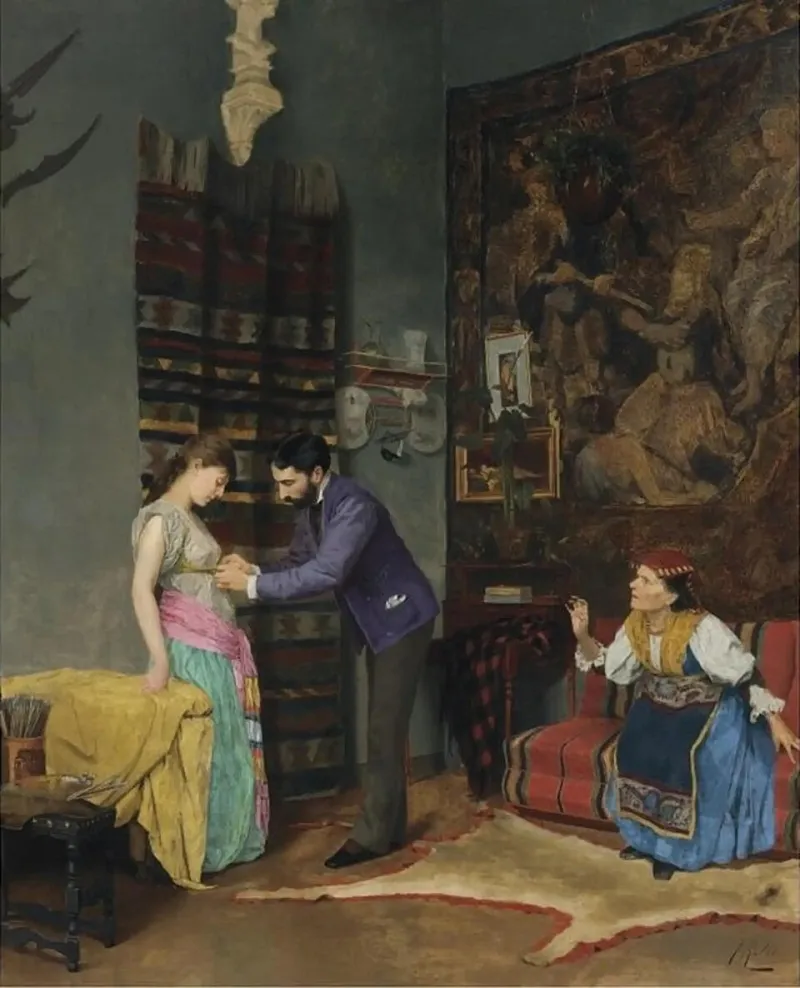
Photo: Théodore Ralli, Public domain, via Wikimedia Commons
On a grey Tuesday in November, I finished a painting. Or rather, I stopped painting it. There is a difference, and it took me a long time to learn it. The surface was still catching the light from the studio window, the edges were neat enough, and the whole thing had that dangerous glow of almost-done. My instinct was to photograph it, send it out, and start talking about where it might hang. Instead, I turned it to face the wall.
That is not a dramatic gesture. It is a small, slightly irritating one. The painting sits there with its back to the room, and I get on with other things while pretending not to think about it. But over the years, that week of silence has saved me from more mistakes than any amount of squinting at a fresh canvas.
The Last Brushstroke Is a Liar
When you have been working on a painting for days or weeks, you stop seeing it. You see the decisions instead: the passage you repainted three times, the corner that finally came right, the colour you mixed on a whim and now rather like. Your brain fills in the gaps and tidies the awkward bits. It is a useful delusion while you are working. It is a terrible one when you are deciding whether the thing is actually finished.
A painting that is still facing you is still talking. It is asking for one more touch, one more adjustment, one more half-hour before dinner. Turning it around removes that conversation. The back of a canvas is wonderfully blunt. It has no composition, no colour, no argument. It is just a rectangle with a job to do, and it gives your eyes somewhere else to go.
Why I Turn It Around
The practical reasons are ordinary. Oil paint needs time to settle. Thick passages can look dry on the surface while remaining softer underneath. Varnish, if it is going to be used at all, should not be rushed. Even acrylics, which dry far faster, can change subtly as the final layers lose their moisture and the sheen evens out. A painting that looks one way under studio lights on Tuesday can look noticeably different by the following weekend.
But the real reason is less technical. I need to forget the painting slightly. Not completely — I am not hiding it in a cupboard — but enough that when I turn it back around, I meet it as a viewer rather than as the person who made every mark. That shift is hard to fake. A cup of tea and a five-minute break will not do it. Seven days usually will.
What the Week Actually Changes
The first glance after a week is the honest one. Problems that were invisible on Tuesday tend to announce themselves on Monday. A shape that seemed balanced now leans. A dark corner that felt moody now feels muddy. A highlight that looked brave now looks like a scratch. Sometimes the reverse happens: a passage I was convinced was wrong turns out to be holding the whole painting together. Either way, the week has done its job.
Light matters here, especially in a British November. The studio may be bright at ten in the morning and almost dim by three. A painting that works in one light may go flat in another. Facing it away for a few days does not change the light, but it stops you from adapting to the same conditions day after day. When you finally turn it back, you are more likely to notice how it behaves in the room as it actually is, not as you wish it were.
The Faults That Come Forward
In my experience, the week tends to expose a few recurring things. Values are the big one. It is easy to paint a mid-tone that looks rich in isolation and then realise it is neither light nor dark enough to do any work. Drawing is another. A line that felt expressive on Tuesday can look merely wobbly after a rest. Colour temperature is subtler. A warm grey that seemed comforting can start to feel sour next to a cooler passage, and a cool shadow can look like a bruise rather than air.
There is also the question of edges. Fresh paint has a way of making every edge look deliberate. Give it a week and you can see which edges are doing too much, which ones are fighting, and which ones would be better left alone. None of this is glamorous. Studio work rarely is. But it is the difference between a painting that is finished and one that is merely stopped.
A Collector's Version of the Pause
Collectors do not need to turn a painting to the wall for a week, but the principle is worth borrowing. If you are looking at a work that has just been finished, ask the artist whether it has had time to settle. A good studio will usually know. Some painters release work immediately; others prefer a short gap between the final mark and the first viewing. Neither approach is wrong, but it is useful to know what you are looking at.
If you are buying from an open studio or a show, try not to decide in the first flush of excitement. Go back the next day if you can. Look at the painting from the doorway, from the side, and in the sort of light it will live in at home. If it is a commission, build in a pause before delivery. A week is not a magic number, but it is long enough for the artist to catch a problem and short enough that nobody loses momentum.
The same patience helps with your own walls. A new painting often needs a few days before it stops being a new painting and starts being part of the room. That is not indecision. It is just your eye adjusting.
The Practical Rules
My version of the wall-facing week is not complicated. The painting goes face to the wall somewhere dry and out of the way. I do not peek every day. I might make a note if something occurs to me, but I try not to act on it. When the week is up, I turn it around in daylight, stand back, and look properly. Then I decide whether it is finished, needs a small correction, or needs to go back on the easel for a longer conversation.
Not every painting gets the full seven days. Small studies sometimes settle faster. Heavy oil passages sometimes need longer. The point is not the number. The point is the gap between making and releasing. That gap is where a lot of quiet work happens, even when nothing visible is being done.
When the Week Stretches
Sometimes a painting stays facing the wall for a fortnight. Occasionally it stays there because I have run out of nerve, not because it needs more time. That is a different problem, and I have learned to recognise it. If the week ends and the painting is still asking for changes I cannot name, it usually means I am avoiding a decision rather than waiting for clarity. In that case, the honest move is to put it back on the easel and make the change, or admit that it is not going to work and move on.
The wall is a tool, not a hiding place. Used well, it gives a painting a chance to stop talking long enough for you to hear what it is actually saying. Used badly, it becomes another way to delay the moment when the work has to meet the world. The difference is usually obvious by the end of the week.
So the painting is still facing away as I write this. On Monday I will turn it around. I expect I will find one or two things that need attention. I also expect I will be glad I waited. In a studio, patience is not a virtue so much as a practical habit — and the back of a canvas is one of the cheapest teachers you will ever have.