A Stranger on the Wall: First Steps With Art That Came Down the Family Line
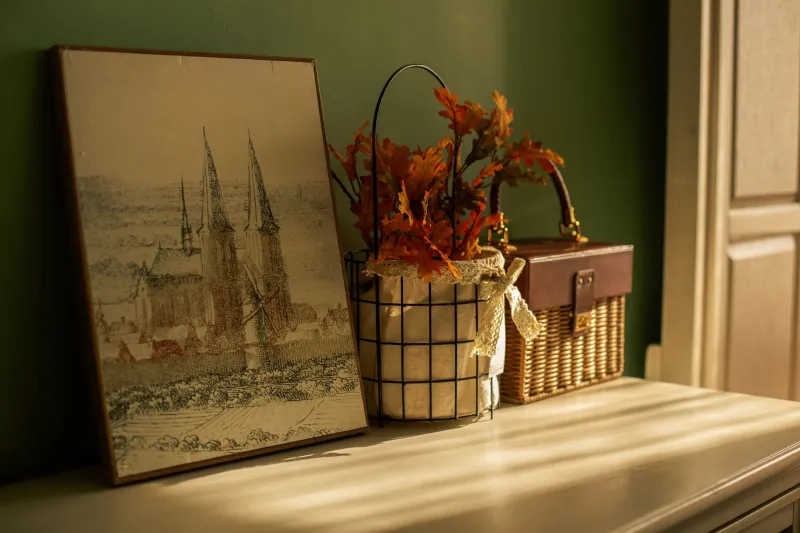
There is a particular sort of silence that follows the words, ‘You’ll be having the painting, then.’ It arrives in a solicitor’s office, a half-empty dining room, or at a kitchen table covered in bin bags. You nod. You say something about it being lovely. And then you get it home and realise you have absolutely no idea what happens next.
Inherited art is rarely a clean handover. It comes with a frame that smells of old houses, a story you only half remember, and a wall that is already full. The good news is that you do not have to decide everything in a weekend. Give it a month. Here is a sensible order of operations.
Begin at the back, not the wall
Before you think about hanging it, turn the painting around. The reverse is often more informative than the front. Look for a signature, an inscription, a gallery label, an auction stencil, a framer’s stamp, or a handwritten note on the stretcher. Photograph everything, including the frame corners and any brittle tape. If there is a label from a provincial exhibition in 1962, that is not just nostalgia — it is part of the object’s history.
Do not clean anything yet. Not the canvas, not the frame, not the glass. Dust is honest; aggressive cleaning is not. A soft brush and a gentle vacuum on the reverse, with a muslin square over the nozzle, is about as far as you should go before speaking to a conservator.
Have the condition conversation early
Original paintings are physical things. They crack, flake, bloom with mould, or sag on their stretchers. In a British house, damp is the quiet enemy. Check for foxing, tide marks, lifting paint, and any previous restoration that has yellowed. If the frame is gilded and shedding, keep it away from textiles and soft furnishings until you know what you are dealing with.
This is also the moment to think about where it has been living. A loft above a radiator, a garage, or a wall against a chimney breast are all common culprits. If the painting has come from a smoky house, it may need a professional surface clean — but that is a job for someone with insurance and a conservation qualification, not a damp cloth.
Paperwork is nice; absence is normal
You may find a will that says ‘the painting of the harbour’, a receipt from a long-gone gallery, or a letter from the artist. Keep it all. Provenance does not have to be grand. Even a photocopy of an old insurance schedule helps.
If there is no paperwork, do not panic. Many family paintings arrive with nothing but a name on the back and a vague memory of a great-aunt. Write down what you know while the people who know it are still around. Names, places, dates, and the story of how it got there are all worth capturing. In the trade, that is called provenance; at home, it is just the family record.
Value comes in two flavours
There is market value and there is family value. They are not the same, and one does not cancel the other.
For market value, start with a reputable auction house or a specialist dealer who handles the period. Many UK auctioneers offer free preliminary valuations, and some will do a home visit for larger collections. Be honest about your intentions: insurance, sale, or simply curiosity. An insurance valuation is not the same as a sale estimate, and a dealer’s offer is not the same as an auction result.
For family value, ask yourself the awkward question: would you keep it if it had been bought at a car boot sale? If the answer is no, that does not make you a philistine. It makes you someone with limited wall space and a right to a home you actually like.
A decision framework for the first month
Try these four questions, in this order:
- Do I actually like looking at it? Not the person who owned it — you.
- Does it fit the life I have now? Consider size, light, damp, and whether it will be safe above a radiator.
- Can I care for it properly? If it needs restoration you cannot afford, that is useful information, not a moral failing.
- Is there someone else in the family who would love it more? Ask before you rehome it.
If the answer to the first two is yes, keep it and hang it. If the answer to the first is no but the answer to the fourth is yes, offer it to that person with a clear note about its condition. If nobody wants it, selling is a legitimate option — and so is donating to a local museum or art school, provided they want it.
Hang it, insure it, or store it properly
If it stays, hang it away from direct sunlight and radiators, use proper picture hooks, and check the cord. Add it to your contents insurance if it is valuable, and tell your insurer if you have had conservation work done. If it goes into storage, do not wrap it in bubble wrap against the surface. Use acid-free tissue, a rigid board, and a dry, stable room.
Leave room for changing your mind
Inherited paintings often need a year, not a week. You may hate it in November and love it in June. You may find the artist’s name in a local archive and discover a whole story. You may also decide, quite reasonably, that it is not your painting to keep.
That is allowed. The point is not to be reverent. The point is to be deliberate. A painting you did not choose can still become part of your home — or it can become someone else’s. Either way, it deserves a proper look before it goes back on the wall.