Thermal Shock and the Boot of the Car: Getting a Painting Home Through a British Cold Snap
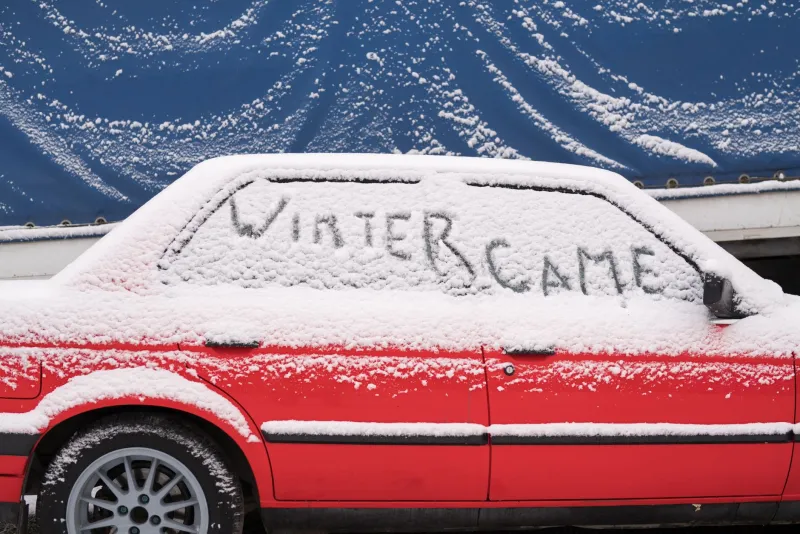
There is a particular kind of British cold that gets into everything. It waits at the edge of a car park, seeps through the boot lid and turns a seemingly simple journey — studio to front room — into a small test of nerve. If you have just bought an original painting and the forecast is threatening frost, the painting is not the only thing that needs steady handling. So does the plan.
A painting is not a poster in a tube. It is a set of materials behaving in relation to the air around it: canvas or board, paint film, varnish, stretcher bars, maybe a frame with joints that have their own opinions. Sudden changes in temperature and humidity can make those materials move at different rates. That is the heart of the matter. Not drama, just physics.
Why a painting dislikes a sudden change
Think of a canvas as a tightly strung surface. In the cold it contracts; in a warm room it expands. The paint film on top may respond more slowly, or differently, depending on whether it is oil, acrylic, or something with a varnish layer. Add damp air and you get the conditions for condensation — moisture settling on a cold surface when it meets warmer air. That is why the risk is not simply “cold”. It is cold followed quickly by warm, especially warm and humid.
This is why the instinct to blast the car heater on the way home is worth resisting. A painting that has spent an hour in a chilly boot does not need to meet a tropical dashboard. It needs a gradual, boring journey into room temperature.
The boot often beats the back seat
A heated van or a cosy car cabin can be worse than a cool boot, provided the boot is dry and secure. Heat accelerates the change in temperature, and if the air is moist — which British winter air often is — you are inviting condensation. A chilly but stable boot is usually the kinder environment, as long as the painting is wrapped properly and cannot slide about.
Transport it upright where possible, especially if it is a stretched canvas. Lying a large canvas flat can be fine for short journeys if it is well supported, but upright keeps the surface away from anything resting on it. For smaller works, a flat box with padding is sensible. Avoid leaving the painting in the car overnight, and do not treat the boot as a temporary storage unit while you pop into town for lunch.
Wrap it, but do not suffocate it
Good wrapping is about protection without trapping moisture against the surface. Start with acid-free tissue or glassine over the painted face if the artist has supplied it. Bubble wrap should not go directly against the paint film; use a barrier layer first. Cardboard or foam board gives rigidity, and a blanket or moving quilt cushions the whole package. If the artist has kept the original packaging, use it. They probably packed it for a reason.
Avoid sealing a painting inside a plastic bag if there is any chance it is not completely dry or if the packaging will sit in a cold, damp place. Trapped moisture is the enemy. A breathable outer layer, such as paper or cardboard, is often better than a fully sealed plastic cocoon. If in doubt, ask the artist how they would move it themselves.
Condensation is the quiet gatecrasher
When you get home, resist the urge to unwrap the painting straight away. Bring it inside still wrapped and leave it in the coolest room in the house for a few hours — longer for a large work or a very cold day. This lets the package adjust gradually. If the outer wrapping feels damp or clammy, wipe the outside carefully and leave the painting wrapped a while longer. Do not put it next to a radiator, log burner or dehumidifier in an attempt to speed things up.
Only unwrap when the package feels close to room temperature. If you see condensation on the inside of the wrapping, stop and let it settle further. A painting that has been chilled through needs patience, not a hairdryer.
The Christmas timing question
Late November and December are busy for everyone, including couriers and removal firms. Depots can be unheated, vans can sit in queues, and “next day” can become “next week” without warning. If a painting is a Christmas gift, aim to collect or receive it earlier than you think necessary. The last fortnight before Christmas is not the moment to discover that a specialist courier has no slots or that a parcel is sitting in a cold distribution centre.
If you are buying from an artist or gallery, ask about their Christmas cut-off dates. A sensible handover before the festive rush is worth more than a heroic dash on 23 December.
Insurance and the paper trail
Before the painting leaves the studio, check what is covered. Your home contents policy may not automatically include art in transit, and a courier’s standard liability can be limited. Ask whether transit insurance is included, what it covers, and what you need to do if something goes wrong. Photograph the painting and its packaging before it travels. Keep the receipt, the condition report if there is one, and any correspondence about value.
If you are using a courier, ask whether they have experience with original art rather than general furniture. If you are collecting yourself, check your own car insurance or contents policy for transit cover. It is dull admin, but it is the difference between a story and a costly story.
Questions worth asking before handover
- How has the painting been wrapped, and is the paint film fully dry or varnished?
- Will the packaging protect the surface without trapping moisture?
- Is transit insurance included, and who is liable at each stage?
- What is the plan if the journey is delayed or the weather turns?
- Can the painting be collected in person, and is there a warm, dry space for the handover?
- Are there specific instructions for unwrapping and acclimatising the work?
A good artist or courier will not mind these questions. They are the sort of thing that separates a careful handover from a hopeful one.
A short winter checklist
Wrap with a barrier layer against the paint, cushion the corners, keep the package upright and secure. Use a dry boot rather than a hot cabin. Bring it inside wrapped, leave it to settle, then unwrap slowly. Keep it away from radiators and damp walls. And give yourself more time than you think you need — especially in December.
A painting can survive a British winter journey. It just prefers not to be rushed, roasted or left in the car while you do the weekly shop.