The Week-Long Audition: Why a Painting Deserves a Trial Run Before It’s Yours

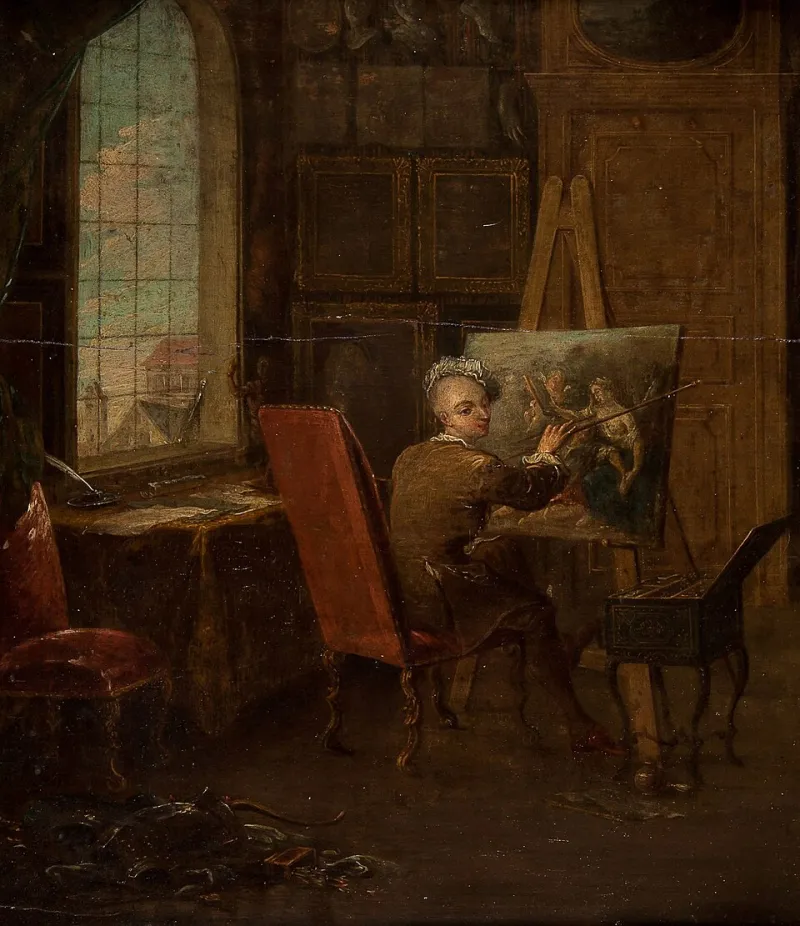
Photo: Kun Can, Public domain, via Wikimedia Commons
There is a particular kind of optimism that lives in an online photograph of a painting. The colours look clean, the scale seems manageable, and the whole thing appears to hover in a bright, uncluttered room that exists only in the photographer’s imagination. Then it arrives at your house, meets your radiator, your north-facing window and your dog, and the conversation changes.
That is why a short home trial — a week on the wall before you commit — has become a quietly sensible idea for collectors and artists alike. Not a free loan, not a permanent arrangement, and certainly not a way to avoid making a decision. Think of it as an audition. The painting gets to prove itself under your ceiling, and you get to find out whether the thing you loved on a screen still works when the kettle is on.
Why a Photograph Is a Flattering Liar
Cameras are generous. They flatten texture, boost contrast and ignore the way a canvas can turn slightly green under a household bulb. A painting that looks warm and glowing online may read as chalky in a west-facing sitting room in November. A piece that seems modest in a gallery photograph can turn out to be the size of a small door.
A week on the wall answers the questions a JPEG cannot. Does it hold its own beside the sofa, or does it look like a guest who has arrived too early? Does the frame work with your skirting boards? Does the surface catch the light from a lamp in a way that is beautiful at seven in the evening and irritating by nine?
These are not fussy questions. They are the ordinary questions of living with an object, and they are exactly the ones a trial period is designed to answer.
What Seven Days Actually Reveals
A week is long enough to see a painting in every mood of the day. Morning light is usually cooler and more honest; late afternoon light in a British winter is brief and low, and it can make a dark painting look muddy or a pale one look luminous. You will notice the colour shifts that no showroom can replicate.
You will also notice the practical things. How does it sit above a picture rail? Does it crowd a doorway? Is the hanging wire at a sensible height, or does the top edge disappear behind a lampshade? And perhaps most usefully: do you stop seeing it? Some paintings settle into a room and become part of the architecture of your day. Others keep demanding attention in a way that feels exhausting rather than enjoyable.
That is not a failure of the painting. It is information.
Setting Fair Terms: A Simple Framework for Artists
For artists, lending a work for a home trial should feel professional, not precarious. The simplest approach is a short written agreement — one page is plenty — covering the basics.
First, the dates. A week is standard, perhaps ten days if transport is involved. Second, a refundable deposit, usually a percentage of the sale price, held to cover minor damage or the cost of reframing if something goes wrong. Third, insurance: the collector should confirm that their contents policy covers borrowed property, or arrange temporary cover for the agreed value. Fourth, a condition report with a few dated photographs before the painting leaves the studio, and another set when it comes back.
Transport is worth spelling out. Who is driving? Is the painting travelling face-up in a padded sleeve, or sliding around in a boot? A borrowed painting should not be treated like a suitcase. If the artist is delivering and collecting, that cost can be built into the terms. If the collector is collecting, ask them to bring a blanket and a passenger seat, not a bicycle basket.
One more line worth adding: the painting remains the artist’s property until it is paid for. A trial is not a sale, and a deposit is not a purchase. Clear language prevents most awkwardness later.
What Collectors Should Check Before Saying Yes
Before you borrow a painting, walk the room properly. Is there a wall that gets direct sun for part of the day? Original works — particularly watercolours, pastels and anything on paper — dislike strong daylight. Is the wall damp, or recently painted? A canvas needs to breathe, and a fresh emulsion wall can be a poor friend to a framed piece.
Check your insurance. Most UK home contents policies cover items temporarily in your home, but the limits vary, and borrowed property can sit in a grey area. A quick call to your insurer is less tedious than an argument after a leak.
Think about traffic, too. A painting on trial in a hallway with a school bag swinging past it is not really being given a fair hearing. Neither is one above a radiator that clicks on at five in the afternoon. Choose a wall where the work can be seen properly, not just stored attractively.
And be honest with yourself about the return. If you are borrowing a painting, you are also agreeing to give it back. That sounds obvious, but the awkward moment is real. A week passes quickly, and a painting that has settled into your room can start to feel like it already belongs there. That is precisely why the trial exists — but it is also why the dates should be agreed in advance, not negotiated in a slightly embarrassed phone call.
The Awkward Bit: When It Has to Go Back
Returning a painting is not a rejection of the artist. It is a conclusion. Some of the most useful trials end with a polite handshake and a note that says, genuinely, “I’m glad I saw it here.” The collector has learned something about their room; the artist has learned something about how the work behaves outside the studio. Neither of those lessons is wasted.
If the painting is going back, pack it as carefully as it arrived. Reuse the same sleeve, the same corners, the same bits of foam. Take a photograph before it leaves your wall. And keep the conversation warm. The art world in the UK is small enough that a graceful return is remembered just as fondly as a sale.
A Note on British Rooms
We ask a lot of our houses. Alcoves, chimney breasts, picture rails, narrow Victorian hallways and windows that seem to face the wrong way for eight months of the year. A painting that works in a white-walled gallery may need a different kind of attention in a terraced house in Sheffield or a flat in Bristol.
That is the real argument for the borrowed wall. Not indecision, but evidence. A week in your own front room, with your own slightly crooked lampshade and your own unpredictable November light, is worth more than a hundred polished photographs. If the painting passes the audition, you will know why. And if it doesn’t, you will know that too — which is its own kind of good news.
As I write this in November 2026, with the afternoons closing in and the studio lamp on earlier each day, I am more convinced than ever that collectors deserve to see a painting in the place it will actually live. Ask the question. Set the terms. Give the work a week. Then decide.