The Reverse Side Speaks: Reading a Painting’s Hidden Autobiography Before You Commit
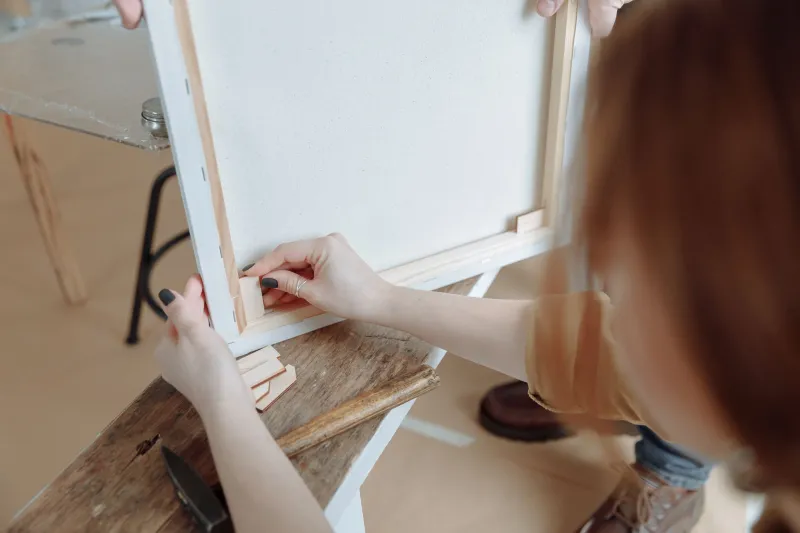
We are trained, quite rightly, to look at the front. The composition, the colour, the way the paint sits. But anyone who has bought a few pictures soon learns that the reverse side is where the quieter, more useful information tends to live. Think of it as the service history of a painting: not a certificate of authenticity, not a price tag, but a set of clues that can tell you plenty about materials, age, storage and the odd bit of social history. In 2026, with so much buying happening through online listings and provincial salerooms, being able to read the back is a genuinely practical skill.
Start with permission, not a screwdriver
Before you start inspecting, ask. In a studio, most artists are perfectly happy for you to turn a canvas around — they may even enjoy the conversation. At an auction or dealer’s viewing, ask for a condition report or for the work to be taken off the wall. Never unscrew a frame, peel back backing paper or prise off a stretcher bar yourself. If the painting is framed and sealed, you are looking at the exposed edges, the stretcher bars and whatever is visible through the dust cover. That is often enough.
A torch helps. So does raking light — hold the light low and across the surface rather than straight on. It will pick up old labels, pencil marks and the slight ridges left by repairs. Keep your hands clean, avoid resting weight on the canvas, and do not lean the painting against anything that could press into the front.
The stretcher tells you about time and making
Stretcher bars are the wooden skeleton behind a canvas. Look for stamps, stencils and maker’s marks. British suppliers have used a variety of marks over the decades, and a canvas-maker’s stamp can give you a broad sense of period. But treat it as a clue, not a birth certificate. Artists reuse old canvases, cut down stretchers and stretch new linen over old bars. A stamp tells you when the canvas was made; it does not tell you when the painting was made.
Pencil notes are often more personal. You might find a title, a date, a price from a past exhibition, an inventory number, or a note to a framer. Sometimes there is a small sketch or a colour test. These marks are part of the studio record. They can be charming, and they can be useful, but they are not a substitute for provenance. A pencilled title on the back is not proof that the painting is by the person named on the front.
Labels are social history, not a certificate
Old exhibition labels are some of the most romantic things you will find on a reverse. A faded label from a regional arts society, a gallery in a market town, or a summer exhibition can tell you where a work has been and how it was once seen. Framer’s labels are useful too: they can place a painting in a particular town or workshop and sometimes hint at a date.
What labels rarely do is prove authorship. Labels get removed, reused and transferred. A prestigious name on a label is not the same as a prestigious name on the canvas. If a seller is leaning heavily on a label to justify a price, ask for the paperwork that connects the label to the painting. Ask what else is known. A label is a conversation starter, not a conclusion.
Repairs, patches and the honest scar
Old repairs are not automatically a problem. A lining, a patch, a filled tear or a replaced stretcher bar may simply be the result of a long life. Many historic paintings have been conserved more than once. What matters is whether the repair is stable and whether it has been done with sympathy for the original materials.
Red flags include fresh filler that looks like icing, heavy overpaint, damp staining, mould, rusting staples and stretcher bars that have gone soft or wormy. In older British homes, pictures often live in lofts, above chimney breasts or on damp external walls, and the back of a canvas can show the consequences. If you see something you do not understand, ask a conservator rather than a mate with a staple gun. A condition issue is a reason to ask questions, not necessarily a reason to walk away.
Canvas-maker marks and the dating game
Canvas stamps and mill marks can be fascinating. They may include a supplier’s name, a place, a weight or a preparation method. They can help you understand whether you are looking at a modern universal-primed cotton duck or an older linen. But dating a painting from a canvas stamp alone is a risky business. Stretchers can be reused, canvases can be relined, and artists can work on material that has been sitting in the studio for years.
Use the back to build a picture, not to deliver a verdict. Combine what you see with the front, the frame, the provenance and the artist’s own account. If the painting is by a living artist, that last part is often the most reliable of all.
When to ask the artist directly
If you are buying from the artist, ask. Most will happily tell you when a work was made, what it is painted on, whether it has been restored and why there is a pencil note on the back. Good questions are simple: When did you paint it? What materials did you use? Has it been repaired or varnished? How has it been stored? If you are buying from a dealer, ask for the same information in writing, along with a receipt that describes the work clearly.
Do not turn the inspection into an interrogation. The back of a painting is not a trap to catch anyone out. It is simply another part of the object, with its own story to tell. Read it with curiosity, ask sensible questions and let the answers inform your judgement. The front may be the performance; the back is often the rehearsal notes. Both are worth your attention before you commit.